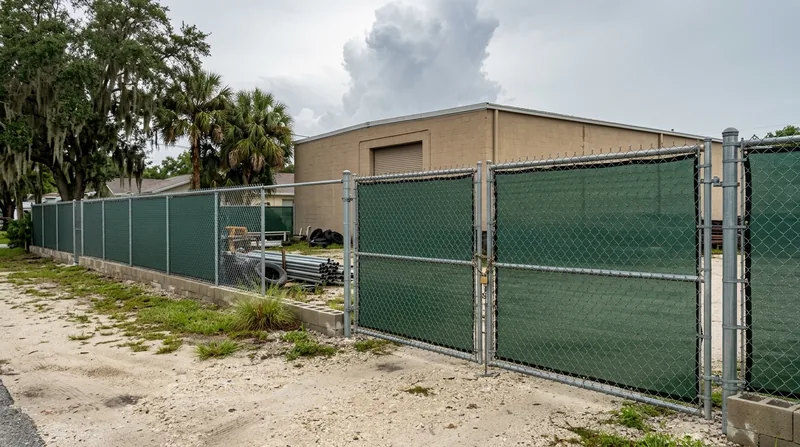




Construction sites, property developments, and temporary site containment across the St. Petersburg peninsula and Tampa Bay area demand commercial fence installation that goes up fast, meets code, and holds up through Florida's wet season and storm-driven weather. St. Petersburg sits on low-lying terrain only a few feet above sea level, where standing water after heavy rains and salt-spray exposure from the Gulf and Tampa Bay create harsh conditions for temporary barriers. Whether you are securing an active jobsite in the mid-century subdivisions of central St. Petersburg, protecting a development near the waterfront neighborhoods of Snell Isle or Shore Acres, or containing materials on the barrier islands of St. Pete Beach and Treasure Island, we install commercial chain link fence, temporary construction fence, and silt fence that meet local codes, hold their line, and come down on schedule. Since 2015, we have worked with builders, general contractors, and property managers across the greater Tampa Bay region. Call (727) 591-6938 for a free site assessment, or visit our homepage to learn about our full range of fencing services.
Why Commercial & Temporary Fencing Matters in St. Petersburg's Construction Environment
St. Petersburg's construction landscape spans historic neighborhoods, mid-century residential blocks, and active waterfront development. Temporary fencing protects workers, secures materials, controls site access, and contains dust and debris during excavation and framing. On the peninsula's low-lying terrain, where seasonal rainfall and storm surge create drainage challenges, proper silt fence installation prevents sediment runoff into storm drains and adjacent properties. Local building departments in St. Petersburg and the surrounding jurisdictions require documented containment and erosion control on most active jobsites. A properly installed temporary barrier also reduces liability exposure and keeps neighbors informed of site boundaries.
- We install four-foot and six-foot chain link barriers with tension bands and stretcher bars for stability on level and sloped terrain.
- Silt fence is secured to posts set at proper spacing and height to capture sediment during heavy rain and construction runoff.
- Gate openings are sized and hinged for equipment access while maintaining site security when the gate is closed.
- All temporary fencing is removed and disposed of on schedule, leaving the site clean and ready for the next phase.
Temporary fencing that fails to hold or that allows sediment escape can trigger code violations, fines, and project delays. We size and install for the jobsite's terrain, expected duration, and local weather patterns.
Key info: St. Petersburg and Pinellas County require erosion control permits on most construction sites. Before we install silt fence or temporary barriers, verify with your local building department that the site plan includes approved erosion control. We work from your site plan and permit, and can advise on standard layouts to meet code.
For more on how we handle protection during site work, see our fence removal and site restoration page.
How We Install Commercial & Temporary Fencing in St. Petersburg: A Step-by-Step Process
Every jobsite is different. A residential infill project in Historic Uptown requires different containment than a waterfront lot in Venetian Isles or a commercial pad site in Largo or Clearwater. We begin with a site walk, confirm the property lines and site plan, call 811 for utility locates (required by Florida law before any digging), and then lay out the barrier according to your plan and local code. Posts are set in tamped soil or concrete depending on soil conditions and how long the fence will stand. Chain link mesh is stretched tight and secured with tension bands. Silt fence is installed at the toe of slopes and along downhill property lines to trap sediment.
- We schedule the 811 utility locate at least 48 hours before we dig, and mark all utilities on site before post holes are augered.
- Posts are set at standard spacing (typically six feet on center for chain link) in holes deep enough to resist racking and wind load.
- Chain link fabric is unrolled, stretched using a come-along or powered stretcher, and secured to posts with tension bands and stretcher bars.
- Silt fence is stapled or screwed to posts and buried at the base to prevent sediment from flowing underneath during heavy rain.
- Gate hinges, latches, and self-closing hardware are installed and tested before the site is handed over to the contractor.
Our crew confirms measurements, tests gate swing and latch function, and photographs the completed installation for your records.
Example: A residential development in South Pasadena required temporary fencing around a two-lot infill project with a steep slope toward the street. We installed six-foot chain link around the perimeter, added silt fence along the downhill edge, and set a double-swing gate for equipment access. The barrier held through two heavy summer storms and was removed cleanly after the framing inspection.
Learn more about our chain link fence installation for residential and commercial applications.
| Approach | Description | Best for |
|---|---|---|
| Four-foot chain link | Standard 11-gauge galvanized or vinyl-coated mesh, posts set six feet apart, tension bands and stretcher bar. | Small to mid-size jobsites, material storage areas, residential infill projects. |
| Six-foot chain link | Taller barrier with 11-gauge or 9-gauge mesh, deeper post set, anti-sag bracing for wind and slope conditions. | Large commercial sites, hillside or waterfront lots, projects requiring higher security or containment. |
| Silt fence | Geotextile fabric stapled to posts, buried at base, installed along downslope perimeter and sediment basins. | Erosion control, sediment containment, stormwater compliance on slopes and near water bodies. |
| Temporary gates | Single or double swing gates with self-closing hinges, latches, and anti-sag bracing, sized for equipment access. | Construction site entry, equipment access, controlled perimeter access during active work. |
Commercial & Temporary Fencing Cost in St. Petersburg: What to Expect
Commercial fence pricing depends on the type of barrier, site terrain, soil conditions, and how long the fence will stand. A four-foot chain link temporary fence on level ground costs less per linear foot than a six-foot barrier on a slope or a silt fence installation that requires careful burial and anchoring. St. Petersburg's low-lying terrain and seasonal rainfall mean that soil conditions can vary from sandy and well-draining in mid-century subdivisions to clay-heavy and water-retentive near the waterfront neighborhoods. We provide a free site quote after a walk-through; the estimate includes material, labor, post setting, and gate installation. Travel is included across St. Petersburg and the surrounding service areas.
Factors that affect cost include the linear footage of fence, the height and mesh gauge of chain link, whether posts are set in tamped soil or concrete, the length of silt fence and number of sediment basins, site access for equipment, and the duration of the temporary installation. Waterfront or sloped sites often require deeper post sets and anti-sag bracing, which adds labor and material cost. Getting two or three estimates from local contractors is smart practice; compare the scope, materials, and timeline, not just the price.
For detailed pricing guidance and to request a free estimate, visit our pricing page or call (727) 591-6938. We respond within 24 hours with an estimate and timeline.
What to Look for When Hiring a Fence Contractor Near St. Petersburg
Choosing a contractor for commercial or temporary fencing is about more than price. You need a crew that understands local codes, respects site safety, and delivers on schedule. In Florida, fence contracting licensing is set at the county or municipal level and varies from one jurisdiction to the next. There is no statewide fence contractor license class. Always verify with your local building department what credentials or permits are required for your project. Fully insured contractors carry general liability and workers' compensation coverage; ask for a certificate of insurance before work begins. References from other builders or GCs in the area are valuable, especially for sites in Historic Uptown, Snell Isle, or the barrier islands, where site access and neighbor relations matter.
- Confirm that the contractor carries full insurance with a certificate of insurance available on request.
- Ask for references from other jobsites in St. Petersburg or nearby areas, and call at least two to verify quality and timeline.
- Verify that the contractor understands local permitting requirements and will obtain or help coordinate any erosion control or temporary fence permits required by the city or county.
- Check that the contractor performs 811 utility locates before digging and marks all utilities on site in your presence.
- Get a written estimate that includes material, labor, gate hardware, and removal or disposition of the temporary fence at the end of the project.
A contractor who takes time to walk the site, asks about your schedule and site constraints, and explains the work clearly is more likely to deliver a fence that meets code and lasts the duration of your project.
Ready to get started? Contact us for a free site assessment and estimate.
Commercial & Temporary Fencing in St. Petersburg: Pricing Guide
| Service | Price | Details |
|---|---|---|
| Four-foot chain link temporary fence | Free site quote | Material, labor, and post setting on level ground; terrain and soil conditions may affect final cost |
| Six-foot chain link with anti-sag bracing | Starting at $45/linear foot | Includes deeper post set, tension bands, stretcher bar, and bracing for wind and slope stability |
| Silt fence installation | Starting at $8/linear foot | Geotextile fabric, post installation, burial at base, and sediment basin setup per local code |
| Temporary gate (single swing) | Starting at $350 | Includes gate frame, hinges, self-closing hardware, latch, and anti-sag bracing for equipment access |
| Site removal and cleanup | On estimate | Removal, disposal, and site restoration at project end; cost depends on fence length and material type |
| Free estimate | 24-hour response | No obligation; includes site walk, measurement, and written scope with timeline and total cost |
Indicative pricing, the exact cost depends on square footage, finish, and site access. Free personalized estimate within 24h at (727) 591-6938.


