Fence Company in St. Petersburg, FL: Installation, Repair & Gates
St. Petersburg Fence Company serves homeowners across St. Petersburg, Clearwater, Largo, Pinellas Park and Seminole with fence installation, repair, and gate work that fits this specific landscape. Whether you're looking for a fence company near me in St. Petersburg or need work done in a neighboring community, we handle wood and vinyl privacy fencing, chain link, aluminum and ornamental iron, pool barriers, and automatic gates. The work we do reflects what this area actually needs: fences that stand up to clay soil that shifts with the seasons, Gulf humidity that attacks fasteners and wood at the ground line, and the storm season that runs from June through November when a fence can go from sound to flattened in an afternoon.
Most properties in our service area sit on the same coastal plain, and nearly every residential lot is fenced. That means we know the soil, the building stock, and the failure modes that show up most often. When a fence leans, when a post rots out, when a gate drags, or when a storm takes down a section, call (727) 591-6938 for a free estimate. We'll walk the whole fence line, not just the part that moved, and tell you whether repair makes sense or replacement is the better spend.
Why Fences Lean in St. Petersburg: Clay Soil and Rotted Posts
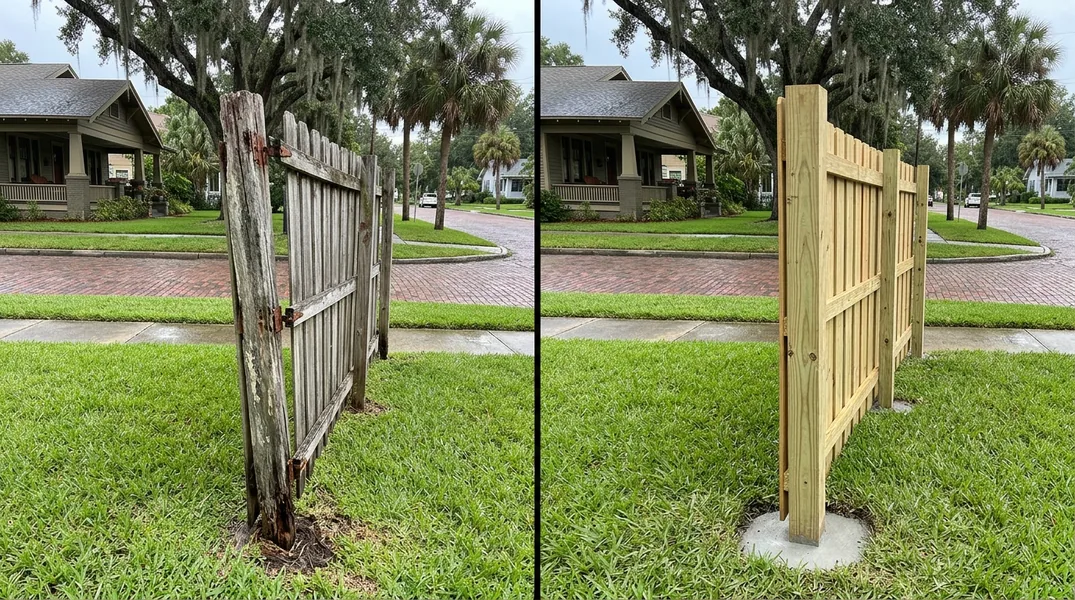
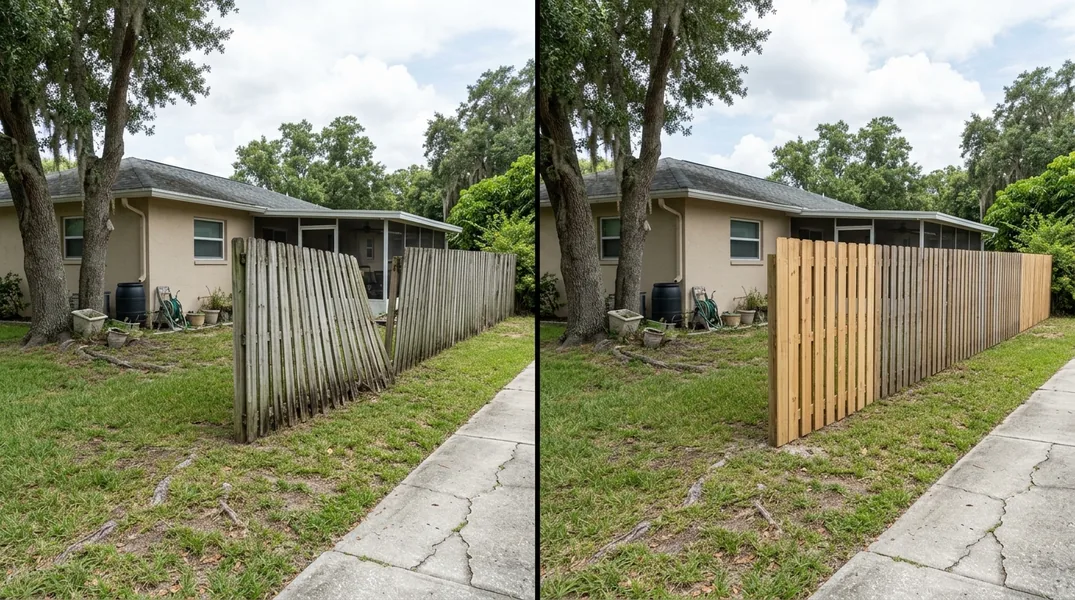
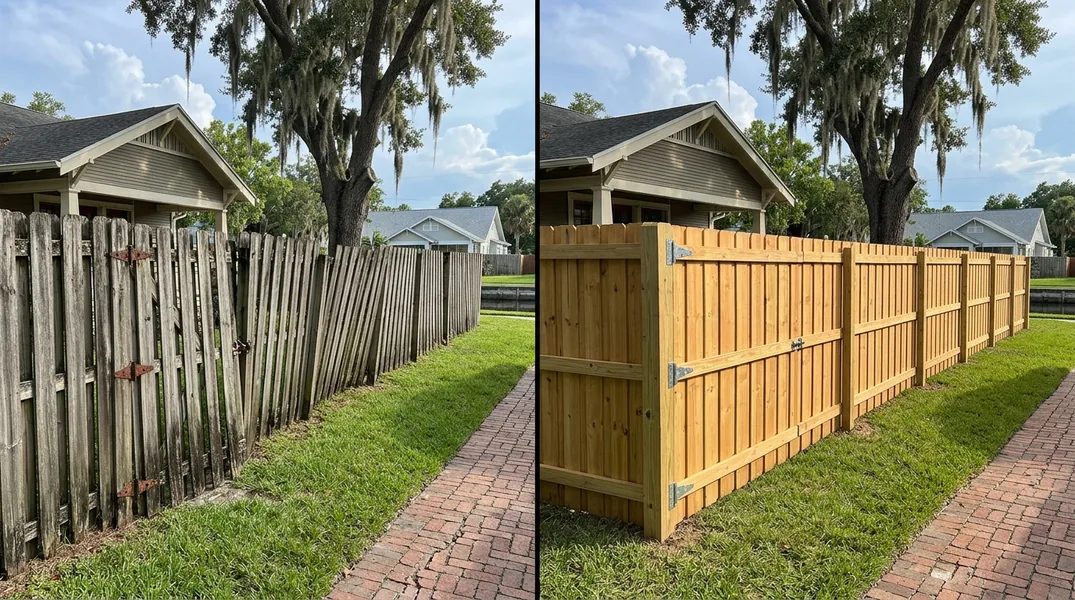
A leaning fence in St. Petersburg is almost always a post problem, not a panel problem. The clay soil here swells when it absorbs rain and shrinks when it dries out, working a post back and forth season after season until it racks out of plumb. At the same time, moisture sits at the ground line year-round under this humidity, and wood that stays damp at the base where the load concentrates will rot. Neither happens overnight, but both are predictable. A fence that was vertical three years ago and leans now has likely lost integrity in one or more posts while the pickets and rails above are still sound.
When we assess a leaning fence, we walk the entire fence line and test every post, not just the section someone called about. We check whether the concrete footing itself has heaved or moved, or whether the post has failed inside a sound footing. That distinction matters because it changes what needs to be done. If you have a fence with solid pickets and rails and a handful of failed posts, the repair is to reset or replace those posts in new concrete, and the rest of the fence carries on. A fence where posts have rotted at the ground line along most of the run has reached end of life, and patching it section by section over the next few years will cost more than replacing it once. We quote both options honestly when both are real, and we recommend the one that saves you money over time. On rotted wood: we replace wood that has decayed at the ground line due to moisture. We do not perform termite or pest inspections, apply chemical treatments, or carry out pest control work, which is a separate regulated trade. If you have concerns about insects, a pest control contractor can address those separately. Call to discuss your fence or learn more about Fence Post Repair & Replacement.
The cost to repair a fence line depends on how many posts have failed and whether the concrete footings are sound. A fence repair that replaces two or three posts can add years to a fence that still has useful life in it. If most posts are gone or the panels are damaged beyond a few sections, a full fence replacement is often the clearer choice. We price by the linear foot on site, so we see the whole picture before quoting.
Storm Damage Fence Repair in St. Petersburg
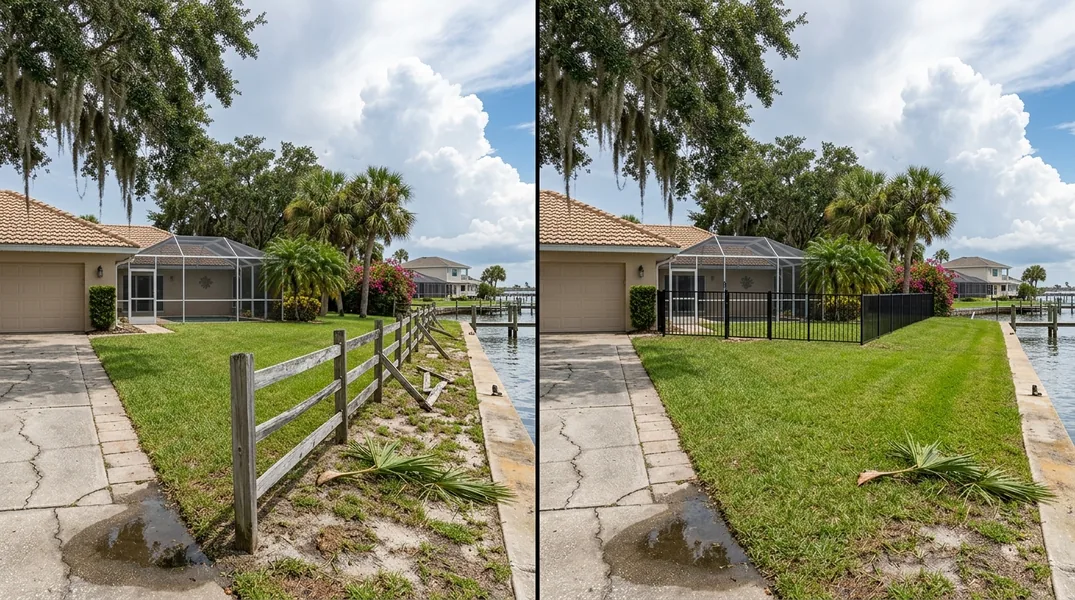
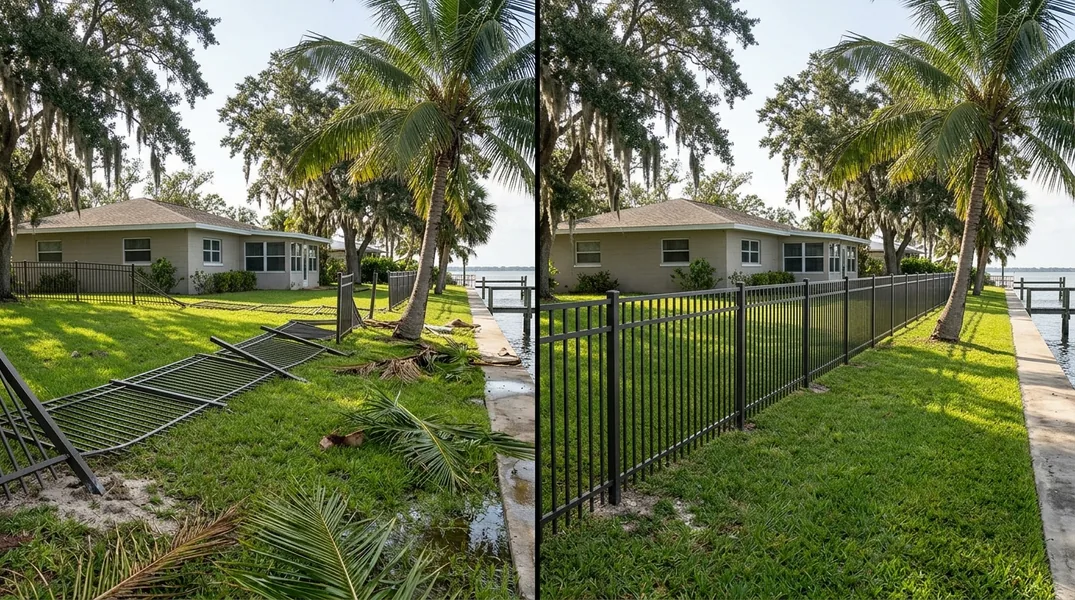
Tropical storms and hurricanes can push an entire fence line over on the same bearing, snap posts at or below grade, or tear panels away. When that happens, a fence rebuilt should come back stronger than it was before, with posts set deeper or in larger diameter concrete, and with materials chosen to handle the next storm better. We offer a free damage assessment after a storm, document the damage section by section with photographs, and provide a written estimate you can submit to your insurance carrier if you choose. We help you document what happened, so you have clear information to work with.
Coverage decisions rest entirely with your insurance company, and we cannot predict what they will approve or deny. We do not act as an adjuster, negotiate with carriers on your behalf, or make promises about what will be covered. If you have a homeowners insurance policy, contact your agent directly to report the damage and ask what documentation they need. We can provide that documentation, and we can rebuild your fence once you have decided how to proceed. For damage assessment and repair estimates, call (727) 591-6938 or request a free estimate to discuss storm damage fence repair.
Cedar, Pine, Vinyl or Chain Link: Choosing for This Climate
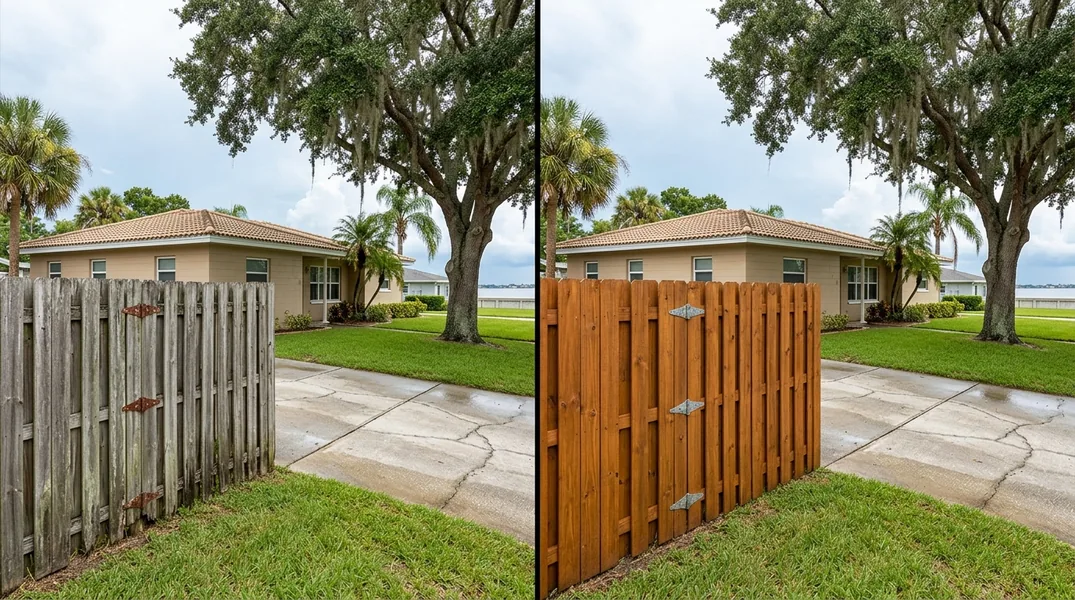
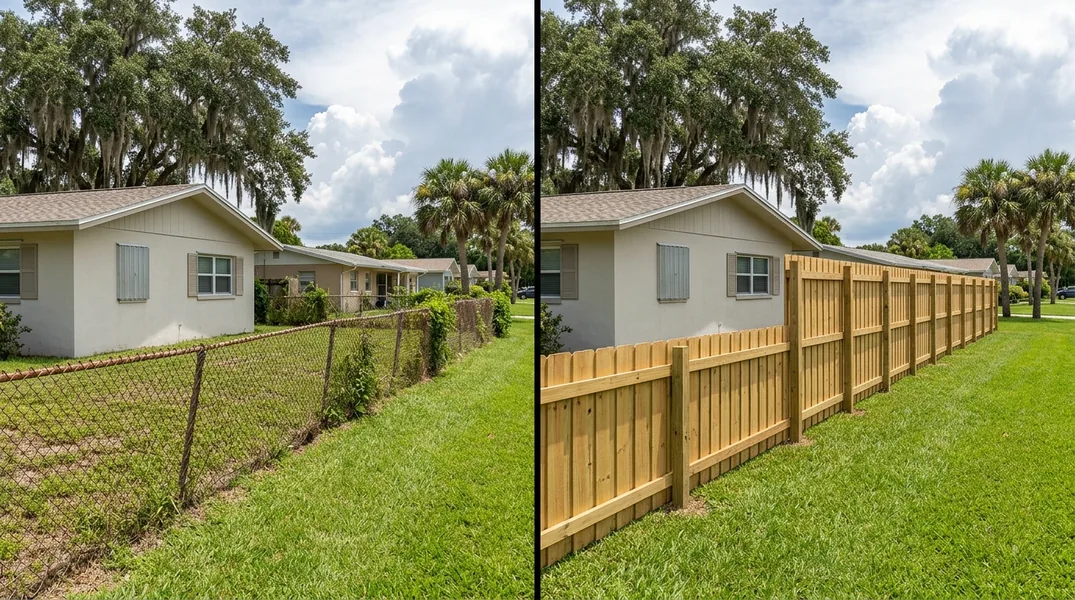
Choosing a fence material for St. Petersburg means weighing maintenance, durability, and cost against the climate you're in. Cedar is beautiful and naturally rot-resistant, but under this sun and humidity it needs cleaning and re-staining every two to three years to hold its color and protect the wood. Pressure-treated pine is a solid alternative that costs less upfront and handles moisture well, though it lacks cedar's natural appeal and still requires periodic maintenance. Vinyl and PVC require almost no maintenance and resist fading and rot, making them a smart choice if you want a fence to stay looking new with minimal effort, though vinyl is not the best option if you need a fence that can be racked to follow steep grade. Chain link is the toughest material per dollar, especially in galvanized or powder-coated steel, and gauge and mesh size determine how long it will hold up to weather and use. Aluminum and ornamental iron fencing offer elegance for front yards and pool areas, and aluminum can be racked to step or follow grade without damage. All of these materials are priced by the linear foot, and the actual cost depends on site conditions we see in person: slope, access, whether there is an old fence to remove, and gate count all factor into the final number.
Maintenance is the hidden cost of any fence. A cedar fence that is cleaned and re-stained on schedule can last fifteen to twenty years or longer. One that is left exposed to the elements will fade, check, and lose integrity much sooner. Vinyl and pressure-treated pine require far less work, which is why they are popular in this market. Pricing varies by material, so we recommend calling for a site visit to compare options and understand what each choice will cost over time. When you are ready to move forward, we can walk you through wood and privacy fence, vinyl fence, chain link, or aluminum and ornamental iron fencing options.
Permits, HOA Rules, Property Lines & Pool Barriers
Fence regulations in the St. Petersburg area vary by jurisdiction. In most communities, fence height is limited to four to six feet in residential yards, with lower limits in front setbacks or near corner visibility lines. Many cities in the area require a permit before installation begins, while others do not. If your property is in a master-planned community or homeowners association, deed restrictions and architectural guidelines often govern fence height, material, color, and even style. It is worth checking with your HOA before you start, because approval may be required before we can begin work. Requirements vary by city and county, so always verify the rules that apply to your address with the St. Petersburg building department and your HOA before starting your project.
Property lines are determined by a licensed land surveyor using your deed and plat. We install fences on the line you identify, working from your existing survey or plat, but we do not perform boundary surveys or determine where a property line lies. If there is any question about the exact location of your fence line, or if a neighbor dispute exists, a licensed land surveyor can establish the boundary in writing. It is also wise to confirm any neighbor consent or shared fence agreements in writing before we begin work. For pool fencing, Florida law requires a barrier installed to meet local pool barrier codes, with self-closing self-latching hardware on gates. We install pool fencing to meet those requirements, but final determination of compliance rests with your local building official. No barrier replaces supervision of children or swimmers. Before we dig post holes, we request a Florida 811 utility locate to mark underground lines. Locates cover participating utility operators only and do not mark private lines such as irrigation or landscape lighting, so let us know if you have those on your property. Requirements vary, always verify with the St. Petersburg building department and your HOA before starting your project. Call for a free estimate and to discuss what applies to your address.
Ready to get started? St. Petersburg Fence Company serves in St. Petersburg and surrounding areas. Book your free on-site estimate today.
Get Your Free Estimate